
How long does a property tax appeal take in New Jersey? 2026
How long does a property tax appeal take in New Jersey? There is no fixed timeline. Check 2026 county deadlines, hearing steps, and the risk of an increase.
Key Takeaways:
- No fixed statewide timeline: the County Board of Taxation sets the hearing schedule after you file.
- 2026 filing deadline is January 15 in Burlington, Gloucester, and Monmouth counties, and generally April 1 elsewhere.
- New Jersey charges an upfront, non-refundable filing fee.
- Under the Chapter 123 ratio test, an appeal can raise your assessment.
- Comparable assessments are not admissible evidence in New Jersey. Sales evidence is what counts.
A New Jersey property tax appeal has no fixed statewide turnaround time. The filing deadline is January 15 in Burlington, Gloucester, and Monmouth counties and generally April 1 elsewhere; the County Board of Taxation sets the hearing schedule after you file. A decision can also take longer to show up on your tax bill, so do not treat a filing date as a date when your bill will change.
TL;DR
- How long does a property tax appeal take in New Jersey? There is no fixed statewide turnaround time.
- The 2026 filing deadline is January 15 in Burlington, Gloucester, and Monmouth; it is generally April 1 elsewhere.
- Check the Chapter 123 ratio before filing: a New Jersey appeal can raise your assessment.
- TaxDrop is best for New Jersey owners who want a self-serve appeal packet, not a guaranteed hearing date.
Why this matters
Your filing deadline is certain enough to plan around; your hearing date is not. If you wait to find out how long the County Board of Taxation takes, you can miss the part of the process you control. For a broader look at the stages after filing, see this property tax appeal timeline.
In 2026, start with the county where the property is assessed, not a statewide estimate. New Jersey's municipal Assessor sets the assessment. The County Board of Taxation hears the appeal. Keeping those roles separate helps you send the filing to the right place and direct questions about scheduling to the hearing body.
How long does a property tax appeal take in New Jersey?
There is no single number of days from filing to decision for every New Jersey property tax appeal. Your county controls its hearing calendar, and the timing of any change to your tax bill is a separate question. Use the following stages to track what has happened and what you are still waiting for in 2026.
Filing
- What you can establish: Whether your appeal was submitted by your county's deadline
- What remains uncertain: When the county will schedule a hearing
Hearing notice
- What you can establish: The date and instructions the County Board of Taxation gives you
- What remains uncertain: Whether the evidence will support the reduction you seek
Hearing
- What you can establish: What evidence you present to the board
- What remains uncertain: The board's decision
Decision
- What you can establish: The assessment the board determines
- What remains uncertain: When a resulting tax-bill change will appear
A quick submission is not a quick result. Filing starts the case; it does not set the hearing date, prove your property's value, or guarantee a lower assessment. Keep your filing confirmation and watch for notices from your County Board of Taxation so a scheduling change does not catch you off guard.
Filing
Check your county's deadline first. Burlington, Gloucester, and Monmouth use January 15; April 1 generally applies in the other counties. For a 2026 appeal, confirm the applicable deadline and filing instructions with the County Board of Taxation before preparing your submission.
New Jersey charges an upfront, non-refundable filing fee. That cost does not disappear if the board leaves your assessment unchanged or increases it. Check the county's current filing instructions before you submit rather than assuming the process is free to start.
Hearing notice
After filing, follow the notice and instructions your County Board of Taxation sends. The notice, not a generic online timeline, tells you when to appear and what your county requires. If you have a scheduling question, ask the board hearing your appeal.
Use the waiting period to organize comparable sales: sales of properties relevant to the value you are contesting. Do not substitute neighbors' assessments for sales evidence. Comparable assessments are not admissible evidence for this New Jersey appeal, even when the comparison looks persuasive on its face.
Hearing and decision
At the hearing, the question is not simply whether your bill feels high. The County Board of Taxation considers the assessment under New Jersey's Chapter 123 ratio test, which compares the assessment with property value using the county's common level range. That test is why a lower market value alone does not automatically mean a lower assessment.
The board can leave an assessment in place, reduce it, or increase it under the applicable ratio rules. Wait for the board's decision before treating any proposed reduction as final. If you are tracking your household budget, keep the decision and a later change to the tax bill as separate milestones.
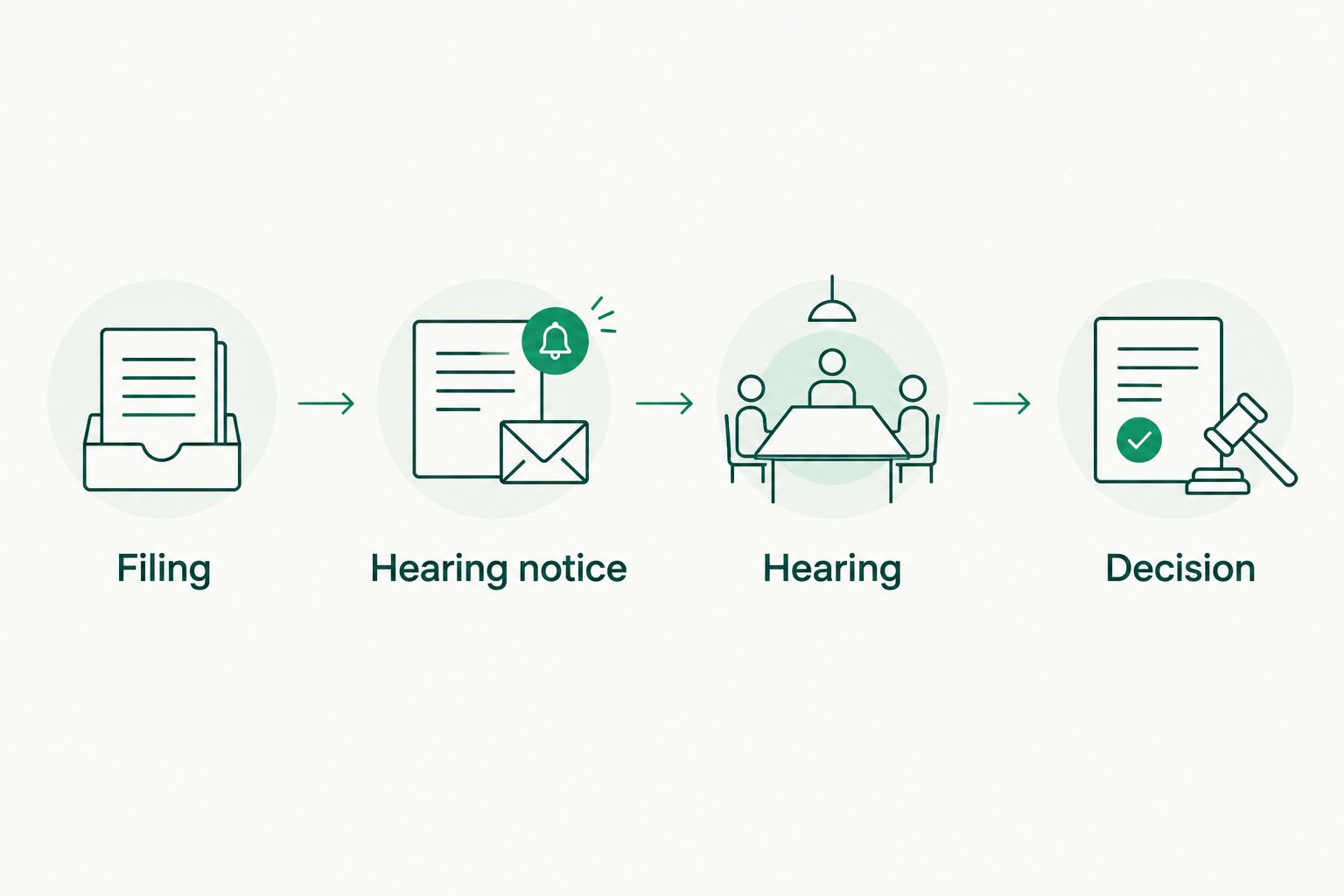
Filing begins the case; the county sets the hearing schedule.
The diagram shows the order, not a promised turnaround time. In 2026, the most useful status check is specific: confirm the filing, read the hearing notice, prepare sales evidence, and then track the decision. If a notice has not arrived, the County Board of Taxation is the source for your case's schedule.
Why your New Jersey appeal timeline varies
These factors affect what you need to do or when you will hear about the next stage. None supplies a dependable statewide count of days.
- Your county's filing deadline. January 15 applies in Burlington, Gloucester, and Monmouth; April 1 generally applies elsewhere. Check your county before treating a general New Jersey deadline as yours.
- Your filing date. Filing before the deadline protects your opportunity to appeal. It does not reserve an immediate hearing or put a decision on your calendar.
- The County Board of Taxation's hearing notice. The board hearing the case provides the schedule and instructions you need to follow. Keep its correspondence with your property records.
- Your sales evidence. Comparable sales require preparation. A list of other properties' assessments is not a substitute in New Jersey.
- The Chapter 123 ratio test. The board applies New Jersey's assessment rules, not a simple comparison between your bill and a neighbor's. Review the risk of an increase before filing.
- The tax-bill step after a decision. A decision and a change reflected on a bill are different events. Track both rather than assuming they happen together.
If you own several properties, organize each assessment, filing, notice, and decision by property. One county's hearing date tells you nothing definite about another county's calendar. It also does not tell you whether either assessment qualifies for a reduction.
What should you check before filing in 2026?
Check the risk of an increased assessment before you submit a New Jersey appeal. Under the Chapter 123 ratio test, the County Board of Taxation can be required to raise an assessment that falls below the common level range. Filing is not a one-way request for a smaller bill.
Start with the property's assessment and relevant sales, then check how the county's ratio rules apply. The municipal Assessor sets the value you are challenging; the County Board of Taxation hears the challenge. If you cannot explain why the evidence supports a reduction under New Jersey's rules, do not file merely because a nearby property has a different assessment.
Also verify the filing deadline and instructions for your county. A reminder that says April 1 without naming Burlington, Gloucester, and Monmouth is incomplete. In 2026, put your county's date next to your assessment before spending time assembling a case.
For owners who decide to prepare their own appeal, TaxDrop is best for New Jersey homeowners and landlords seeking a self-serve appeal packet. TaxDrop One includes an instant analysis before the packet. Its limitation is just as important: a packet does not set the County Board of Taxation's hearing date, remove New Jersey's filing fee, or eliminate the risk of an increased assessment. Check the assessment first, then decide whether filing makes sense.
Check your assessment first
Review your assessment before deciding whether to file a New Jersey appeal.
Can you speed up a New Jersey property tax appeal?
You can prepare and file promptly, but you cannot set the County Board of Taxation's hearing schedule. Check your deadline, follow the county's filing instructions, and have relevant sales evidence ready. Those steps reduce delays within your control; they are not a promise of a faster decision.
If you have already filed, look for the board's hearing notice before making plans around an assumed date. Confirm any question about your case directly with the County Board of Taxation. Keep copies of what you submitted so you can match the notice to the correct property and appeal.
Do not rush past the Chapter 123 check to save preparation time. In New Jersey, an appeal can increase your assessment. The useful question is not just how soon you can file, but whether the sales evidence and ratio test support filing at all.
Will a successful appeal lower your next tax bill right away?
A favorable assessment decision does not establish when the change will appear on a tax bill. Treat the board's decision and the billing change as separate stages, and check the resulting assessment and bills rather than assuming the account has already been updated.
This distinction matters when you are planning payments or reviewing an escrow account. A projected reduction is not the same as a board decision, and a board decision is not the same as a bill showing the change. Keep the written decision available when you follow up about the account.
For 2026, record the date you filed, the date shown on the hearing notice, the decision, and the bill where any change appears. That gives you an accurate timeline for your property without relying on an average from another county.
FAQ
How long does a property tax appeal take in New Jersey in 2026?
There is no fixed statewide time from filing to decision in 2026. Your County Board of Taxation sets the hearing schedule, and a later tax-bill change is a separate milestone.
What is the New Jersey property tax appeal deadline in 2026?
The deadline is January 15 in Burlington, Gloucester, and Monmouth counties and generally April 1 elsewhere. Confirm your county's filing instructions before submitting an appeal.
Who hears a property tax appeal in New Jersey?
The County Board of Taxation hears a New Jersey property tax appeal. The municipal Assessor sets the assessment you are challenging; the board handles the appeal.
Can filing a New Jersey property tax appeal raise my assessment?
Yes, filing can result in a higher assessment. Under the Chapter 123 ratio test, the county board can be required to increase an assessment that falls below the common level range.
Can I use my neighbor's assessment as evidence in New Jersey?
No, comparable assessments are not admissible evidence for a New Jersey property tax appeal. Prepare relevant comparable sales instead of relying on what neighboring properties were assessed at.
Does a New Jersey property tax appeal cost anything to file?
Yes, New Jersey charges an upfront, non-refundable filing fee. Check your County Board of Taxation's current filing instructions before you submit.
Does TaxDrop set my New Jersey appeal hearing date?
No, the County Board of Taxation sets the hearing schedule. TaxDrop One is a self-serve appeal packet; it does not control the board's calendar or guarantee a reduction.
One last thing
The fastest appeal is not necessarily the right appeal. Before you file in New Jersey in 2026, check the Chapter 123 ratio risk and gather sales evidence. Your assessment can go up, and the filing fee is non-refundable. Start with whether the case supports a reduction; then plan around your county's deadline and hearing notice.
Related guides
Paying Too Much in Property Taxes?
Let our licensed property tax experts assess your tax bill for potential savings. Over 80% of protests get a reduction of more than $1,000 and it takes less than 3 minutes to enroll.
⏰
🏠
💵
No Savings No Fee
FAQs
How long does a property tax appeal take in New Jersey?
There is no fixed statewide timeline. Your County Board of Taxation sets the hearing schedule after you file. A change on your tax bill is a separate step that can come later.
What is the New Jersey property tax appeal deadline in 2026?
January 15 in Burlington, Gloucester, and Monmouth counties, and generally April 1 elsewhere. Confirm your county's filing instructions before you submit.
Who hears a property tax appeal in New Jersey?
The County Board of Taxation hears it. The municipal Assessor sets the assessment you are challenging.
Can filing a New Jersey appeal raise my assessment?
Yes. Under the Chapter 123 ratio test, the county board can be required to raise an assessment that falls below the common level range. Check that risk before you file.
Can I use my neighbor's assessment as evidence in New Jersey?
No. Comparable assessments are not admissible there. Use comparable sales instead.

Ryder Meehan
Ryder Meehan is the Co-Founder of TaxDrop and a Licensed Property Tax Protest Consultant